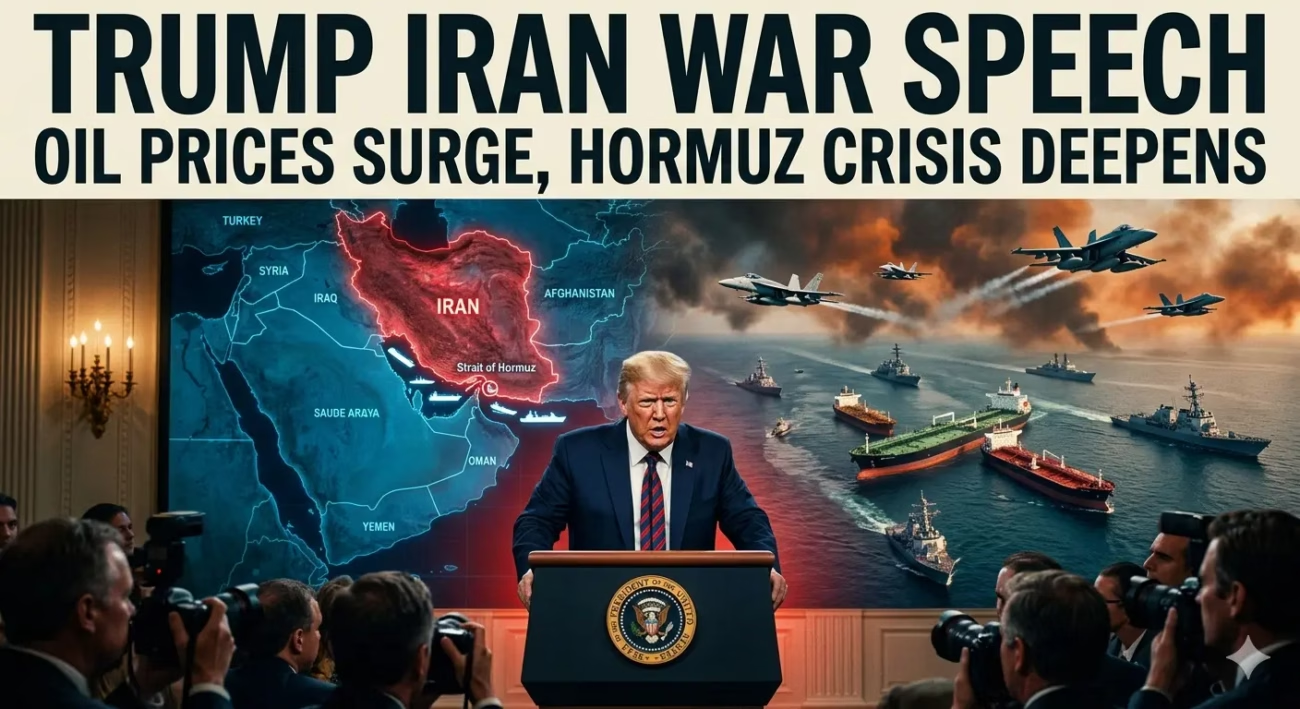
The global economy jolted after Donald Trump’s latest Iran war speech signaled continued military escalation without a clear end date, intensifying fears around the Strait of Hormuz crisis. Oil prices surged above $100 per barrel while stock markets slipped, reflecting uncertainty over one of the world’s most critical energy routes.
The address, delivered in prime time, aimed to reassure Americans, but instead raised more questions than answers. With the Strait of Hormuz still effectively disrupted and diplomacy stalled, analysts warn the conflict could have prolonged global consequences.
Trump’s Iran War Speech and the Strait of Hormuz Crisis Explained
President Donald Trump confirmed that U.S. military operations against Iran are expected to continue for at least two to three more weeks, according to multiple reports.
While he claimed that U.S. objectives, such as weakening Iran’s military capabilities, are nearly complete, he stopped short of offering a definitive timeline for ending the war.
“Further strikes remain possible if Iran does not comply,” officials indicated following the speech.
At the center of the crisis lies the Strait of Hormuz, a narrow waterway responsible for transporting roughly 20% of the world’s oil supply. Any disruption here has immediate global economic consequences.
Why the Strait of Hormuz Matters So Much
The Strait of Hormuz is not just another shipping route. It is the lifeline of global energy markets.
- Carries around one-fifth of global oil shipments
- Connects Middle Eastern oil producers to international markets
- Critical for countries in Asia, Europe, and beyond
Since the conflict escalated in late February 2026, Iranian actions have effectively restricted tanker traffic, triggering supply fears and price spikes.
Interestingly, Trump suggested the U.S. may not depend heavily on the strait, urging other nations to take responsibility for securing it. This stance has raised concerns among allies.
Oil Prices Surge as Markets React
Following the speech, oil markets reacted immediately:
| Indicator | Impact |
|---|---|
| Oil Prices | Jumped above $100 per barrel |
| Global Stocks | Declined amid uncertainty |
| Energy Sector | Gains due to supply fears |
Reports indicate oil prices rose about 5% in a single session, reflecting growing anxiety about prolonged disruption.
Meanwhile, financial institutions warned that continued instability could lead to:
- Rising inflation globally
- Increased fuel costs
- Supply chain disruptions
Conflicting Signals on War Strategy
Trump’s address delivered mixed messaging. On one hand, he claimed significant military success, stating Iran’s navy, air force, and missile systems have been severely damaged.
On the other hand, the lack of a clear exit strategy has left analysts uncertain.
Some key contradictions include:
- Victory claims vs. continued strikes
- Talks of winding down vs. escalation of threats
- Ceasefire rumors vs. ongoing military pressure
According to reports, discussions about a potential ceasefire are happening through intermediaries, but no agreement has been finalized.
Iran, for its part, has reportedly denied claims that it formally requested a ceasefire.
Diplomatic Efforts Struggle to Gain Ground
Behind the scenes, multiple countries are attempting to broker peace and reopen the Strait of Hormuz. However, progress remains slow.
Key developments include:
- Backchannel negotiations involving international mediators
- U.S. conditions tied to reopening the strait
- Iran insists on sovereignty over the waterway
Earlier proposals included a 15-point framework shared via intermediaries, but both sides remain far apart on key demands.
Meanwhile, some nations are exploring independent agreements with Iran to secure safe passage for their shipments. This highlights a fragmented global response.
Global Impact: Beyond the Battlefield
The implications of the crisis extend far beyond the Middle East.
Economic Effects
- Rising fuel prices impacting households worldwide
- Increased transportation and logistics costs
- Volatility in global financial markets
Political Tensions
- Strained relations between the U.S. and its allies
- Pressure on NATO and other coalitions to respond
- Growing domestic criticism within the U.S.
Energy Security Concerns
- Countries scrambling for alternative oil sources
- Strategic reserves being considered or deployed
- Long-term questions about global energy dependency
What Happens Next?
The trajectory of the Iran war and the Strait of Hormuz crisis remains uncertain.
Several scenarios are possible:
- Escalation: Continued strikes could deepen the conflict and further disrupt oil supplies
- Partial Resolution: A limited agreement may reopen the Strait without ending hostilities
- Strategic Withdrawal: The U.S. could declare victory and shift responsibility to allies
Analysts caution that even if active fighting slows, control of the Strait of Hormuz could remain a long-term geopolitical pressure point.
