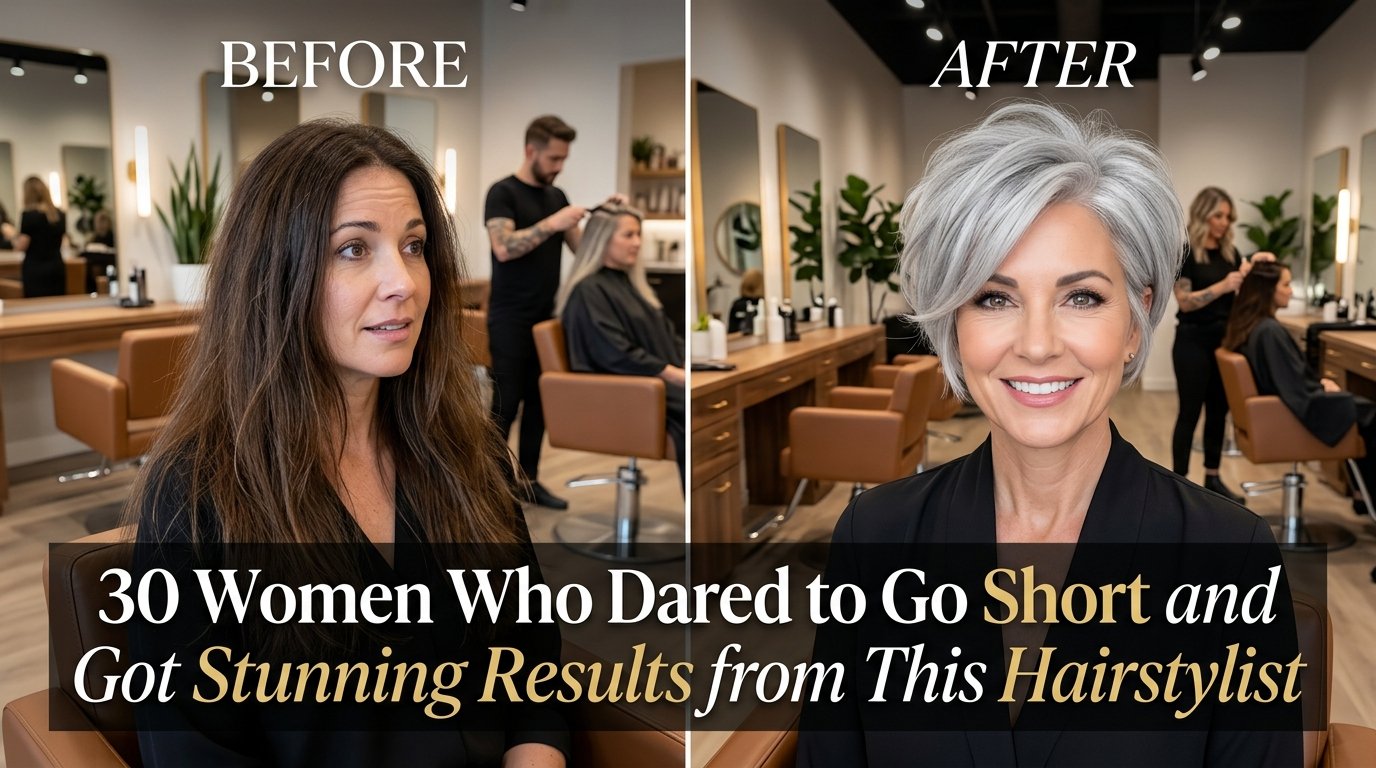
30 Women Who Dared to Go Short and Got Stunning Results from This Hairstylist

Cutting long hair short can feel like a huge decision.

You may save photos of pixie cuts for months, then close the page because you are afraid the style will not suit you. Maybe you worry your face will look too round. Maybe you think short hair will be harder to style. Or maybe you simply cannot picture yourself without long hair.

That is why dramatic before and after photos can be so useful.

Hairstylist Kristina Katsabina, based in Moscow, became known online for transforming women with shorter cuts that work with their hair texture and facial features. One widely shared collection features 30 women who moved from longer styles into pixies, crops, bobs and other short cuts.

The lesson is not that every woman should cut her hair short.

It is that the right short haircut can completely change the balance of a look.

Here are 30 short hair transformations and the ideas you can take from them before your own salon appointment.

1. Long Hair to a Soft Curly Crop

Short hair does not need to be flat or severe.

One of the most flattering transformations uses natural curl and extra texture on top.

Keeping curls visible gives the cut softness while removing much of the weight that comes with longer hair.

This type of style works especially well if your curls become fuller when they are shorter.

Ask your stylist to keep enough length on top for your natural curl pattern to form.

The sides can be shorter without becoming extremely close cropped.

This creates shape while keeping movement around the face.

The original Katsabina transformation collection includes several cuts that use curls and shorter sides to create a lighter look.

2. Waist Length Hair to a Pixie

This is one of the biggest changes you can make.

Going from very long hair to a pixie removes most of the visual weight around the shoulders and neck.

Suddenly, the face becomes the main focus.

Eyes, cheekbones and jawlines can appear more noticeable because there is less hair surrounding them.

That does not mean a pixie automatically makes everyone look better.

The shape matters.

Ask your stylist where they plan to leave length before the first major cut.

A little extra length around the crown or fringe can make a dramatic pixie easier to wear.

3. Long Waves to a Textured Pixie

Long waves can look beautiful.

But they can also hide the natural shape of the face.

A textured pixie gives the hair a completely different direction.

Instead of movement appearing at the ends, it happens around the crown and forehead.

This can create a more energetic look.

Use a small amount of styling cream or texture product rather than coating the entire head.

You want visible separation between pieces.

Not stiff hair.

4. Straight Hair to a Side Swept Crop

A side swept fringe is one of the safest ways to try short hair.

It gives you softness around the forehead while the back and sides remain shorter.

This can be helpful if you are nervous about exposing your whole face immediately.

Ask for enough fringe length to move from one side to the other.

That gives you more than one styling option.

You can wear it smooth for a polished look.

Or use a little texture for something more casual.

5. Medium Hair to a Short Layered Bob

You do not need to jump directly from long hair to a pixie.

A short bob can give you a major change without removing all your length.

Keep the cut around the jaw or slightly below it.

Then add soft layers.

The layers stop the bob from feeling too heavy.

They can also help fine or straight hair move more easily.

This is a good first short haircut if you still want enough length to tuck behind your ears.

6. Long Fine Hair to a Fuller Short Cut

Long fine hair can sometimes look thinner because the length pulls it downward.

Cutting it shorter removes some of that weight.

A blunt or lightly layered shape can make the ends look fuller.

Do not assume more layers always create more volume.

Too many layers can make very fine hair look even thinner at the bottom.

Ask your stylist where your hair naturally has the most density.

Then build the cut around that.

Several of Katsabina’s transformations show how shorter shapes can work well on women with finer hair.

7. Straight Hair to a Tousled Pixie

A pixie does not have to sit perfectly in place.

A slightly messy finish can make it feel younger and easier to wear.

Keep the top longer.

Use your fingers instead of a brush.

Push pieces in different directions.

This works especially well if your hair has a small natural bend.

You can also create texture with a lightweight styling paste.

Start with very little product.

Short hair can become greasy or stiff quickly if you use too much.

8. Long Hair to a Pixie With Long Bangs

If you want a pixie but still like having hair around your face, keep the fringe longer.

The back can be short.

The sides can be shaped around the ears.

But the front stays long enough to sweep across the forehead.

This makes the haircut feel less extreme.

It also gives you styling choices.

Wear the fringe forward.

Push it to one side.

Or lift it away from the face.

One haircut can give you several looks.

9. Shoulder Length Hair to an Asymmetrical Crop

Short hair does not need to be perfectly balanced on both sides.

An asymmetrical cut can create a stronger style.

Keep one side slightly longer.

Tuck the shorter side behind the ear.

This draws attention to the cheekbones and jawline.

It can work especially well with straight or slightly wavy hair.

The key is making the difference look intentional.

A small accidental difference can look uneven.

A clear asymmetrical shape looks like a design choice.

10. Long Hair to a Classic Pixie

A classic pixie keeps the sides and back neat while leaving a little more length through the top.

This style has lasted for decades because it is simple and flexible.

You can make it soft.

You can make it sharp.

You can wear it with bangs or brush the front away from your face.

If you have never worn very short hair before, ask your stylist how often the shape will need trimming.

Short cuts can grow out quickly around the ears and neckline.

Maintenance matters just as much as the first salon result.

11. Gray Hair to a Modern Short Crop

Short hair can be a great way to show natural gray.

Instead of hiding silver strands, the haircut can turn them into part of the design.

Keep texture through the top.

Let gray and darker strands mix naturally.

You do not need every section to be one color.

The contrast can make a crop look more dimensional.

One of the shared Katsabina transformations uses natural silver with a short, textured finish.

12. Long Red Hair to an Edgy Pixie

Bold color becomes even more noticeable on short hair.

A red pixie has less hair, but the color can feel stronger because the shape is so clear.

If your hair is already dyed, tell your stylist before a big cut.

Removing a lot of length may change where your lighter or darker sections sit.

You may need a color adjustment afterward.

That is especially true if your roots are darker than your ends.

The haircut and color should work together.

13. Soft Long Hair to a French Style Crop

A French inspired crop usually keeps a short fringe with a neat, compact shape.

It can look simple without feeling plain.

This works best when the stylist pays attention to how your hair naturally falls around the forehead.

Do not force a very short fringe if your hair grows strongly upward.

A slightly longer fringe may sit better.

This cut can be styled smooth or left more textured.

That makes it useful for someone who wants a short haircut without a lot of daily work.

14. Medium Length Hair to a Feathered Pixie

Feathered layers create movement in a short cut.

The ends do not sit in one solid block.

Instead, they overlap lightly.

This can work especially well for medium density hair.

Ask for softness around the ears and neckline.

Keep more lift through the crown.

The goal is movement rather than maximum volume.

15. Long Hair to a Tinkerbell Style Pixie

Some pixie cuts have a soft, playful shape.

The sides stay close.

The top remains light and textured.

A small fringe frames the forehead.

This type of cut can make the face look more open because the ears, neck and jaw are visible.

Keep the texture soft.

Too much heavy wax can turn a delicate pixie into a stiff shape.

Use a tiny amount of product on the ends.

16. Long Straight Hair to a Very Short Crop

This transformation can feel dramatic because almost all the length disappears.

But very short hair can also make your daily routine much faster.

There is less to dry.

Less to brush.

Less to detangle.

That does not mean there is no maintenance.

Very short cuts often need more frequent salon visits to keep their shape.

Before you make the change, ask yourself which type of maintenance you prefer.

Daily styling?

Or more regular trims?

17. Long Hair to a Short Cut With Volume on Top

Keeping volume at the crown can change the balance of a short haircut.

The extra height creates a longer vertical shape.

This can be useful if you do not like hair sitting flat against the scalp.

Ask for shorter sides and enough length through the top to lift.

Blow dry the hair upward with your fingers.

You may not even need a brush.

Finish with a light product that gives hold without making the hair hard.

18. Thin Hair to a Close Textured Pixie

If your hair is thinning, trying to preserve every inch of length may make the thinner areas more noticeable.

A shorter shape can sometimes create a more even appearance.

That does not mean short hair cures thinning.

It does not.

The haircut simply changes how the existing hair is distributed.

Keep the shape textured rather than slicking every strand flat.

If your hair loss is sudden or unexplained, talk with a medical professional rather than treating it as a styling issue.

19. Long Gray Hair to a Casual Silver Pixie

Natural silver and a relaxed pixie can work beautifully together.

Leave some pieces longer around the top.

Use a slightly messy finish.

This prevents the cut from looking too formal.

It is also a good reminder that gray hair does not require one specific style.

You can wear it long.

You can wear it cropped.

The right choice is the one that fits your hair and your routine.

20. Medium Hair to a Side Parted Pixie

Changing the part can completely change a short haircut.

A deep side part creates more volume on one side and makes the front feel fuller.

It can also help you control a longer fringe.

Ask your stylist which side your hair naturally prefers.

Working with your growth pattern will make the style much easier to manage at home.

21. Short Hair to an Even Shorter Pixie

Sometimes the biggest improvement comes from going shorter than you first planned.

A bob that feels heavy may become much more interesting as a pixie.

A grown out pixie can become sharper when the neckline is cleaned up.

You do not have to start with long hair to have a transformation.

Short to shorter can still change your entire look.

22. Wavy Hair to a Short Curly Crop

Natural waves can become much more visible after a major cut.

Long hair can stretch the pattern.

Remove that weight and you may find more movement than you expected.

Ask your stylist to cut with your natural texture in mind.

A short style that looks perfect when straightened may behave very differently after you wash it at home.

Your normal texture should be part of the plan.

23. Long Hair to a Soft Pixie for Mature Women

Age does not decide whether you can wear a pixie.

Hair texture, density and personal style matter much more.

A softer pixie can work especially well if you prefer something easy to shape.

Keep movement around the crown.

Add a light fringe.

Avoid making the whole haircut extremely close unless that is the look you want.

The original Katsabina collection includes women across different ages, showing that short styles are not limited to one age group.

24. Gray Bob to a Short Silver Crop

If you already wear your hair in a bob, going shorter can make natural gray feel even more noticeable.

Remove the heavier ends.

Keep the crown light.

Let silver strands create natural highlights.

This transformation can also make the neck and jaw more visible.

That changes the entire balance of the hairstyle without adding color.

25. Office Length Hair to a Sharp Professional Crop

Short hair can look polished without becoming boring.

Try a neat side part.

Keep the neckline clean.

Use controlled texture through the top.

This gives the cut enough structure for work while still feeling modern.

You do not need a lot of styling product.

A small amount of smoothing cream can often be enough.

26. Long Casual Hair to a Short Face Framing Cut

If your long hair feels like it is hiding your face, remove some of the length around the cheeks and jaw.

A short face framing cut can bring more attention to your features.

You do not need an extreme pixie.

A short bob with lighter layers around the face can create a similar effect.

This is a good option if you want a change without exposing the whole neck.

27. Dark Hair to a Short Cut With Visible Roots

Roots can become part of a short haircut.

If you have brighter color through the top and darker natural roots, the contrast can create depth.

On long hair, the root difference may look like a grow out line.

On a textured pixie, it can look more intentional because the colors move through shorter layers.

Talk to your colorist before adding more dye.

You may already have enough contrast.

28. Straight Hair to a Bold Blue Pixie

A short cut is a great canvas for bold color.

Blue, violet, copper or pink can look more graphic when the haircut has a strong shape.

But bright color needs care.

Some shades fade quickly.

Ask your stylist what the maintenance will involve before committing.

You should know how often the color may need refreshing and which products are best for keeping it from fading too fast.

29. Long Hair to a Crop With Wispy Bangs

Wispy bangs soften a very short cut.

They also give you some coverage around the forehead without creating a heavy fringe.

This can work well if you like a lighter, more relaxed style.

Keep the ends uneven and airy.

Do not try to make every strand sit in exactly the same place.

The slight irregularity is part of what makes the cut look soft.

30. Long Hair to a Short Cut That Actually Fits the Person

This is the biggest lesson from Kristina Katsabina’s transformations.

The women do not all receive the exact same pixie.

Some have curls.

Some have straight hair.

Some keep longer bangs.

Some go extremely short.

Some keep visible gray.

Some use strong color.

That is what makes the transformations useful.

A good hairstylist does not simply copy the same trendy photo on every client.

The cut should respond to the person sitting in the chair.

Why Can a Short Haircut Change Your Look So Much?

Hair creates a frame around your face.

Change that frame and the proportions you see can change too.

Long hair may cover part of the neck, jaw and cheeks.

Short hair exposes more of those areas.

A fringe can change how much forehead you see.

Volume at the crown changes the overall silhouette.

A side part can create visual movement.

This is why two people with similar face shapes may still need completely different cuts.

Hair texture, density and growth patterns also matter.

That is why your salon consultation is so important.

How to Know If Short Hair Will Suit You

There is no reliable rule saying a certain face shape cannot wear short hair.

The better question is:

Which short haircut will work for you?

Look at four things.

Your Natural Texture

Straight, wavy, curly and coily hair behave differently at short lengths.

Bring inspiration photos showing hair similar to yours.

Your Hair Density

Fine hair and thick hair may need different layering.

Tell your stylist what problems you normally have with volume.

Your Styling Routine

Be honest.

If you do not want to spend 20 minutes styling your hair every morning, do not choose a cut that needs that.

Your Maintenance Budget

Pixies and very short crops can require regular trimming.

A bob may give you more time between appointments.

Ask how the haircut is expected to grow out.

That question can save you frustration later.

What Should You Tell Your Hairstylist Before Going Short?

Do not sit in the chair and simply say:

“Make it short.”

Bring photos.

Show what you like about each image.

Maybe you like the long fringe in one photo.

Maybe you like the neckline in another.

Maybe you love the texture but do not want the same length.

Also show your stylist how much hair you are truly willing to lose.

You can physically point to the shortest length you feel comfortable with.

Then ask four questions.

How will this work with my natural texture?

What will it look like without salon styling?

How often will I need trims?

How will it grow out?

Those answers matter more than whether a haircut is trending.

Should You Go Straight From Long Hair to a Pixie?

You can.

But you do not have to.

Some people enjoy making one dramatic change.

Others feel better going in stages.

You could move from long hair to a lob.

Then try a bob.

Then go to a pixie later.

Neither approach is better.

The staged option gives you time to learn what you like about shorter hair.

The dramatic option gives you the full change immediately.

Choose based on your comfort level.

Do not let someone pressure you into removing more length than you want.

Short Hair Does Not Always Mean Less Work

This is one myth worth clearing up.

Short hair often takes less time to wash and dry.

But a pixie may need more frequent shaping.

You may also need to style the front every morning because there is no ponytail option when it refuses to cooperate.

A bob may require less salon maintenance but more blow drying.

Curly crops may need very little heat but still need moisture and curl products.

So do not choose short hair only because someone told you it is easier.

Choose it because you like the look and the routine fits your life.

The Best Short Haircut Is the One Made for You

The reason these 30 women who dared to go short are so interesting is not simply that a lot of hair disappeared.

It is how different each finished shape can feel.

Kristina Katsabina’s widely shared transformations show curly crops, side swept pixies, silver styles, bold colors and major long to short changes.

That is the real inspiration.

Going short does not mean choosing one standard pixie.

You can keep curls.

You can keep bangs.

You can keep your gray.

You can add bold color.

You can take off two inches or twenty.

If you are considering a big chop, save the transformations you actually like and bring them to a stylist who listens.

The goal is not to look like the woman in the photo.

The goal is to find the short haircut that looks like it belongs to you.

Leave a Comment